International Journal of Communication announces the publication of 85 papers that published in JANUARY

International Journal of Communication invites you to read these 85 publications that published in January
The International Journal of Communication is pleased to announce the publication of 85 papers in JANUARY 2024, which includes the “Special Section on Rethinking Artificial Intelligence: Algorithmic Bias and Ethical Issues” and the “Forum on Sociotechnical Change: Tracing Flows, Languages, and Stakes Across Diverse Cases.” To access these papers, Ctrl+Click on the titles below for direct hyperlinking, or go to ijoc.org to read the Special Section and Forum.

_______________________________________________________________________

EDITORIALS

Envoi: Looking Back With Pride and Looking Forward With Optimism
Larry Gross
 
Passing the Conductor’s Baton: The Score Remains the Same
Silvio Waisbord

ARTICLES

Communication Inequality and the Technopolitical Structure of Platform Work: Aotearoa New Zealand Platform Workers During COVID-19
Leon A. Salter, Mohan J. Dutta

The Heteronormative Male Gaze: Experiences of Sexual Content Moderation Among Queer Instagram Users in Berlin
Rachel Griffin

Using Radical Co-Design to Create and Develop a Technology-Based Solution to Improve Post-Release Outcomes for Formerly Incarcerated Women: LindaBot
Michele Jarldorn, Susannah Emery 

“O Ever Youthful, O Ever Weeping”: Exploring Youth Empowerment Through Platform-Dependent Creative Labor in China
Yunyi Hu

Vaccine Misinformation for Profit: Conspiratorial Wellness Influencers and the Monetization of Alternative Health
Rachel E. Moran, Anna L. Swan, Taylor Agajanian

Explicating the Effects of In- Versus Out-Group Membership and Collective Action Framing on Social Media Activism Messages
Chen Lou, Chelsea Ning Rei Yap, Xuan Zhou, Ji Ah Lim, Melody Tingyi Koh, Aik Tan

Platform Analogies: How Bookstores, Libraries, and Supermarkets Can Inform Thinking on Social Media
Caitlin Petre, Nicole Weber 

“Drop a Bomb on Them . . . and Problem Solved!” An Analysis of Poverty Discourse on TikTok 
Ana Mayagoitia-Soria, Juan Manuel González-Aguilar, Salvador Gómez-García, María Antonia Paz-Rebollo 

Scrolling Past Public Health Campaigns: Information Context Collapse on Social Media and Its Effects on Tobacco Information Recall
George D. H. Pearson, Joseph N. Cappella

Health Information Orientation, Social Support, and Diabetes Self-Care Behavior Among Indian Adults: The Roles of Education and Self-Efficacy
Yam Limbu, Devon Johnson, C. Jayachandran, Christopher J. McKinley, P. Raghunadha Reddy

Ethical Challenges of Digital Communication: A Comparative Study of Public Relations Practitioners in 52 Countries 
Jens Hagelstein, Sophia Charlotte Volk, Ansgar Zerfass, Andréia Silveira Athaydes, Jim Macnamara, Juan Meng, Chun-Ju Flora Hung-Baesecke 

Social Norms, Referent Group Specificity, and College Students’ COVID-19 Vaccination Intentions: Risk and Efficacy Perceptions as Boundary Conditions of Normative Influence
Jie Zhuang, Paul Schrodt, Mengfei Guan 

Network Informational Complexity, Epistemic Political Efficacy, and Fact-Checking
Toby Hopp 

Feeling Threatened and Thinking of Actions? Examining Consumers’ Responses to Corporate Social Advocacy Messages Through Intergroup Threat Perceptions
Xueying Zhang, Mei-Chen Lin 

Consumer-Generated Visual Advertisements in Social Media Brand Communities 
Hui-Fei Lin, Pei-Chih Lin, Benjamin Yeo

Civil Society Chatbots: A Plurality of Conceptual Approaches
Sophie Toupin

Finding Sarah Everard: A Critical Discourse Analysis Exploring the First Two Weeks of News Media Coverage Following Her Disappearance and Murder
Sim Gill

Discussing the Role of TikTok Sharing Practices in Everyday Social Life
Andreas Schellewald

Information Sources, Credibility, Knowledge, and Risk Perceptions: Findings From the National Tuberculosis Survey in South Korea
Jarim Kim, Sunouk You, Yesolran Kim 

The Daily Show’s Climate Change Content: Two Decades of Late-Night Science Communication
Charlotte Gehrke

The Role of Second Screening in Online Political Participation in Jakarta and Islamabad
Drina Intyaswati, Qasim Mahmood, Hermina Simanihuruk 

Engaging International Students via Dialogic Communication
Rachel Dean, Linjuan Rita Men

Knowledge Migration and the Politics of Innovation
Saskia Witteborn 

Getting out of Debt: The Communication Begets Communication (CBC) Typology as an Approach to Theoretical Advancement in the Field
Nathan Walter, R. Lance Holbert, John Jennings Brooks, Camille J. Saucier, Sapna Suresh, Floor Fiers 

Ambiguity Undermines Persuasive Effectiveness: Ego Involvement, Motivated Reasoning, and Message Ambiguity
David M. Keating, Qinjun Fan

Cryptid Communication: Media Messages and Public Beliefs About Cryptozoology
Wyatt Dawson, Paul R. Brewer, Liam Cuddy 

The Labor of Cultural Conception and Uncertainty in Cultural Work: The Work of Korean Drama Writers
Hoyoung Kim 

“A Significant Impact on our Democracy”: Chilean Media Audiences’ Claims for Dignity
Mónica Humeres-Riquelme, Claudia Jordana-Contreras, Jorge Saavedra-Utman

Trust Divide in Health Information Sources? Investigating the Role of Techno-Capital and Social Capital: A Comparative Analysis of General and Low-Income Populations
Jaewon R. Choi, Joseph Straubhaar, Soyoung Park, Maria Skouras, Melissa Santillana, Sharon Strover

Effects of Intergroup Communication on Intergroup Anxiety and Prejudice Through Single Sessions of Peer Counseling in Online Settings
Romy RW, Nick Joyce

Journalistic Theater: A Case Study of Reporting on People’s Emotional Response to Current Affairs With the Body as Medium
Stijn Postema

Talking Facts and Establishing (In)Justice: Discussing Public Matters on Instagram
Luise Salte

Chilling Effects as a Result of Corporate Surveillance in Digital Communication: A Comparison Between American and Dutch Media Users
Joanna Strycharz, Claire M. Segijn

Janus-Faced Portrayal: News Representation of Migrant Workers in Malaysian Newspapers Amid COVID-19
Huihuang Lai, Hanizah Idris, Jiankun Gong

Public Service Media and the Internet: Two Decades in Review
Alessandro D’Arma, Steven Barclay, Minna Aslama Horowitz

Uncertainty Communication in a High-Trust Society: Source Type, Political Preference, and Trust
Øyvind Ihlen, Audun Fladmoe, Kari Steen-Johnsen  

Online Toxicity Against Syrians in Turkish Twitter: Analysis and Implications 
Hala Mulki, Samir Alabdullah, Ahmed Halil, Nawari Al-Ali, Maria Kyriakidou, Ludek Stavinoha

“I Care Where You Come From”: Testing the Conditional Moderated Mediation of Country-of-Origin Effect in Multinational Enterprises’ Corporate Social Responsibility Communication
BaoBao Song

Convergent Television Audiences, Digital Inequalities, and Social Support in Getting Audiovisual Content
Štěpán Žádník, Jakub Macek

What You See from These Survival Games is What Machines Get and Know: Squid Game, Surveillance Capitalism, and Platformized Spectatorship
Jihoon Kim

“These Parents, Themselves, Are Using These Children as Pawns”: The Politicization of Childhood at the U.S.-Mexico Border
Alyvia Walters

Spreading Like Wildfire: The Securitization of the Amazon Rainforest Fires on Twitter
Natalia Umansky

Trust and Online Privacy Concerns in a General Population of Internet Users
Stelios Stylianou

Two-Sided Narration and In-Group Narrator: Examining the Effects of Different Strategies of Mediated Public Diplomacy 
Tianru Guan, Yue Yin, Yilu Yang

Visual Hate Speech and Its Discontents: Young Adult Chinese and Malaysians’ Perception of Visual Hate Speech
Jamaluddin Bin Aziz, Holger Briel

Mapping the Russian Media Field Through Audience Networks and Agenda Choice
Alla Loseva, Anna Moroz, Egor Shmidt, Daniel Alexandrov 

FEATURE

Members in Good Standing? The Relationship Between NoFap/Reboot Communities and the Manosphere
David S. Smith

BOOK REVIEWS

Mark Andrejevic and Neil Selwyn, Facial Recognition
Katerina Girginova

Jürgen Habermas, A New Structural Transformation of the Public Sphere and Deliberative Politics 
Elizabeth Folan O’Connor

Alex Preda, The Spectacle of Expertise: Why Financial Analysts Perform in the Media
Micky Lee  

Dan McQuillan, Resisting AI: An Anti-Fascist Approach to Artificial Intelligence
Florencio Cabello Fernández-Delgado

Eszter Hargittai (Ed.), Handbook of Digital Inequality
Christopher Ali

Moya Bailey, Misogynoir Transformed: Black Women’s Digital Resistance
Hyejin Jo

E Cram, Violent Inheritance: Sexuality, Land, and Energy in Making The North American West 
Shelby R. Crow

Jennifer McClearen, Fighting Visibility: Sports Media and Female Athletes in the UFC
Evan Brody

Larisa Kingston Mann, Rude Citizenship: Jamaican Popular Music, Copyright, and the Reverberations of Colonial Power 
Jiaxi Hou

Meredith Broussard, More Than A Glitch: Confronting Race, Gender, and Ability Bias in Tech
Melike Asli Sim

Sara Shaban, Iranian Feminism and Transnational Ethics in Media Discourse
Laila Abbas

Amanda D. Lotz and Ramon Lobato (Eds.), Streaming Video: Storytelling Across Borders
Melina Meimaridis

Janaki Srinivasan, The Political Lives of Information: Information and the Production of Development in India 
Rajdeep Pakanati

Johanna Dunaway and Kathleen Searles, News and Democratic Citizens in the Mobile Era
Ana Melro

Richard Rogers and Sabine Niederer (Eds.), The Politics of Social Media Manipulation
Qing Xu

Cory Barker, Social TV: Multi-Screen Content and Ephemeral Culture
Aidan Moir

_______________________________________________________________________
Larry Gross, Editor
Kady Bell-Garcia, Managing Editor
Chi Zhang, Managing Editor, Special Sections
Mark Mangoba-Agustin, Webmaster

Please note that according to the latest Google Scholar statistics, IJoC ranks 7th among all Humanities journals and 8th among all Communications journals in the world — demonstrating the viability of open access scholarly publication at the highest level. 

International Journal of Communication Publishes a Forum on Sociotechnical Change: Tracing Flows, Languages, and Stakes Across Diverse Cases

International Journal of Communication Publishes a Forum on Sociotechnical Change: Tracing Flows, Languages, and Stakes Across Diverse Cases

If change is the only constant, then what drives sociotechnical change? Who creates change within and through systems of humans and nonhumans? Which changes echo and repeat? Who suffers or benefits from change? What normative ideals guide hopes and fears of change?

Through empirically grounded, conceptually provocative, and wonderfully playful essays, this Forum on Sociotechnical Change: Tracing Flows, Language, and Stakes Across Diverse Cases, guest edited by Mike Ananny and Simogne Hudson, considers these questions and more by critically tracing different places where people and technologies meet. 

From studies of sports stadiums, homelessness counts, policing jaywalking, travel maps, and chicken farms to venture capitalism, refugee communities, climate crises, diasporic conflict, and autopen controversies, the forum offers not only unique case studies of change but also a larger story of how change emerges from messy but traceable collisions of people, practices, genealogies, representations, infrastructures, and values. 

Intended as provocations and starting points, the essays show how sociotechnical change is everywhere, and how the study of sociotechnical change can be interdisciplinary, playful, creative, and rigorous. 

Though authors come from different institutions and disciplines, they develop their projects through the University of Southern California’s collective MASTS (Media As SocioTechnical Systems), an interdisciplinary initiative fostering convivial exploration and collaboration across historically siloed schools, departments, methods, and traditions. 

We invite you to read these articles that published in the International Journal of Communication on January 1, 2024. Please log into ijoc.org to read the papers of interest. We look forward to your feedback!  
_______________________________________________________________________

Creating a Language of and for Sociotechnical Change: Interdisciplinary Sites, Stakes, and Senses of Transformation—Introduction
Mike Ananny, Simogne Hudson

From AAA TripTik to Google: Maps as Sites of Sociotechnical Change
So Yun Ahn

Disautomated Realities in South Africa: Loadshedding, Poultry Death, and the Promises of Failure
Ziyaad Bhorat

Digital Nations and the Future of the Climate Crisis 
Alfonso Hegde

Plasticity: Accounting for Adaptation in Sociotechnical Systems
Renyi Hong

Humanitarian Innovation in Forced Displacement
Alphoncina Lyamuya

Digital Diaspora and Nationhood: Sociotechnical Imaginaries and Practices of Nationhood
Azeb Madebo

“A Fountain Pen Come to Life”: The Anxieties of the Autopen
Pegah Moradi, Karen Levy

The Stadium as Sociotechnical Change
Cerianne Robertson, Pratik Nyaupane

Structures of Capital and Sociotechnical Change: The Case of Tech Startups and Venture Capital
Benjamin Shestakofsky, Caitlin Petre

Counting on Stability: The Social Construction of the Los Angeles Homeless Count
Will Orr

Pedestrian Mobilities at the Crossroads: The Contestation and Regulation of Jaywalking
Josh Widera

_______________________________________________________________________

Silvio Waisbord, Editor 
Kady Bell-Garcia, Managing Editor
Chi Zhang, Managing Editor, Special Sections
Mark Mangoba-Agustin, Webmaster
Mike Ananny and Simogne Hudson, Guest Editors

Please note that according to the latest Google Scholar statistics, IJoC ranks 7th among all Humanities journals and 8th among all Communications journals in the world — demonstrating the viability of open access scholarly publication at the highest level.

International Journal of Communication Publishes a Special Section on Rethinking Artificial Intelligence: Algorithmic Bias and Ethical Issues

International Journal of Communication Publishes a Special Section on Rethinking Artificial Intelligence: Algorithmic Bias and Ethical Issues

Artificial Intelligence (AI) technologies and applications have rapidly penetrated all aspects of social, political, civic, and cultural life. Despite the exponential growth in and development of AI, algorithmic bias toward gender, age, sexuality, race/ethnicity, and ideology prevails across digital media platforms, ranging from search engines through news sites to social media platforms and generative AI such as ChatGPT. This omnipresence of algorithmic bias results in social issues, such as systematic and repeated unfairness, discrimination, and inequality, privileging certain groups over others, and reinforcing social and cultural biases.

While scholarship in this domain is burgeoning, the causes, components, and consequences of algorithmic bias and ethical issues remain underexplored. Guest-edited by Seungahn Nah and Jungseock Joo, this Special Section on Rethinking Artificial Intelligence: Algorithmic Bias and Ethical Issues addresses longstanding problems regarding algorithmic bias and ethical issues, affecting individuals, groups, communities, and countries across socioeconomic and ideological spectrums. In doing so, the Special Section emphasizes an inextricably interwoven relationship among data and media bias, model bias, and social bias. That is, data and media bias leads to unbalanced training resulting in model bias. Model bias, in turn, reinforces data and media bias and produces discriminatory impact on individuals and society. Human and societal bias then produces skewed representation and participation in data and media bias. This “vicious circle” reinforces bias in the development, use, and application of AI systems. 

The Special Section encompasses a wide range of studies that revisit algorithmic bias in relations to gender, race, data, news, and decision-making. It empirically examines related topics such as algorithmic auditing, algorithmic framing, algorithmic aversion, and algoactivism. The Special Section further stimulates intellectual dialogues for scholars, policymakers, and practitioners to reconsider algorithmic bias in the age of AI.

We invite you to read these articles that published in the International Journal of Communication on January 1, 2024. Please log into ijoc.org to read the papers of interest. We look forward to your feedback!  

Mapping Scholarship on Algorithmic Bias: Conceptualization, Empirical Results, and Ethical Concerns 
Seungahn Nah, Jun Luo, Jungseock Joo

How Gender and Type of Algorithmic Group Discrimination Influence Ratings of Algorithmic Decision Making 
Sonja Utz

The Realientation of the Commons: Wikidata and the Ethics of “Free” Data
Zachary J. McDowell, Matthew A. Vetter

Rage Against the Artificial Intelligence? Understanding Contextuality of Algorithm Aversion and Appreciation
Tessa Oomen, João Gonçalves, Anouk Mols 

Making Algorithms Public: Reimagining Auditing From Matters of Fact to Matters of Concern
R. Stuart Geiger, Udayan Tandon, Anoolia Gakhokidze, Lian Song, Lilly Irani

How Process Experts Enable and Constrain Fairness in AI-Driven Hiring
Ignacio Fernandez Cruz

Questioning Artificial Intelligence: How Racial Identity Shapes the Perceptions of Algorithmic Bias
Soojong Kim, Joomi Lee, Poong Oh

Algorithmic Bias or Algorithmic Reconstruction? A Comparative Analysis Between AI News and Human News
Seungahn Nah, Jun Luo, Seungbae Kim, Mo Chen, Renee Mitson, Jungseock Joo

___________________________________________________________________________________

Silvio Waisbord, Editor
Kady Bell-Garcia, Managing Editor
Chi Zhang, Managing Editor, Special Sections
Mark Mangoba-Agustin, Webmaster
Seungahn Nah and Jungseock Joo, Guest Editors

Please note that according to the latest Google Scholar statistics, IJoC ranks 7th among all Humanities journals and 8th among all Communications journals in the world — demonstrating the viability of open access scholarly publication at the highest level

International Journal of Communication invites you to read these 41 papers that published in November

International Journal of Communication invites you to read these 41 papers that published in November

The International Journal of Communication is pleased to announce the publication of 41 papers in NOVEMBER 2023, which includes the “Special Section on Is Netflix Riding the Korean Wave or Vice Versa.” To access these papers, Ctrl+Click on the titles below for direct hyperlinking, or go to ijoc.org to read the Special Section.
_______________________________________________________________________

ARTICLES

War Propaganda Unfolded: Comparative Effectiveness of Propaganda and Counterpropaganda in Russia’s Invasion of Ukraine
Anton Oleinik, Volodymyr Paniotto

One Big Store: Source Diversity and Value Capture of Digital Games in National App Store Instances
Daniel Joseph, David Nieborg, Chris J. Young

Opinion Extremity Predicted by Media Exposure, Information Processing Mode, and Issue Sophistication About U.S.–China Trade Dispute
Yaxin Dai, Xigen Li 

Outcomes and Affordances: Examining why People use Encryption
Shannon M. Oltmann

The Impact of Trust in the Government on Willingness to Disclose Personal Data in Hong Kong: The Moderating Role of COVID-19 Infection Concern in the Data Disclosure Mediation Model
Chun Hong Tse, Marko M. Skoric

Developing on Shifting Sands: A Case Study of a Workplace Safety Monitoring App During the COVID-19 Pandemic
Jacob Johanssen, Iman Naja, Lamiece Hassan, Carl Adams, Mistale Taylor 

BTS’s Pandemic Hits and Their Implications: Discursive Re-vitalization of Neoliberal Hegemony in K-pop Industry
Gooyong Kim

Restorative Power of Empathetic Communication for Participatory Governance and Community Well-Being
Himani Sharma, Varsha Jain, Emmanuel Mogaji, Anantha Babbili

Motives for Following Social Influencers and Electronic Word-of-Mouth: The Role of Social Capital
Yoojung Kim, Soojin Kim 

Montevideo Convention and CGTN: Defining Statehood for Global Outreach 
Keyu Alexander Chen, Virginia Massignan, Mor Yachin, Carol Kay Winkler, Ayse Deniz Lokmanoglu

Television Continues to Cultivate Attitudes Toward Homosexuality, but Only Among Politically Conservative Individuals and Women: Evidence from U.S. General Social Survey Data 
Lik Sam Chan, Zurong Liang

The Lives of Others: Unauthorized Depictions of Public Figures in U.S. Film and TV Drama
Jonathan Stubbs

Unveiling Gatekeeping Practices in Mobile Environments: A Comparative Analysis of Operating Systems and App Gardens
Juan Ortiz Freuler

Staying Tuned for Censored Information Sources? A Media Habit Approach to Immigrants’ Information Practices
Abby Youran Qin

Quantifying Public Value Creation by Public Service Media Using Big Programming Data
Indrek Ibrus, Andres Karjus, Vejune Zemaityte, Ulrike Rohn, Maximilian Schich

Politicization and Right-Wing Normalization on YouTube: A Topic-Based Analysis of the “Alternative Influence Network”
Curd Benjamin Knüpfer, Carsten Schwemmer, Annett Heft 

Capturing the Media: Similarities Between Viktor Orbán’s and Donald Trump’s Media Aspirations
Adam Klein

Dynamics of Content Diversity Within Issues, Across Platforms: A Pesticide Debate in the News and on Twitter 
Anke Wonneberger, Sandra Jacobs, Iina Hellsten

Productive Power in Digital Constitutionalism: Analyzing Civil Society Actors’ Definitions of Digital Rights
Outi Puukko

Fake or Fact? Factors Predicting the Capability of Recipients to Assess the Truthfulness of Impactful News
Johanna Radechovsky

The Domestication of Netflix in the Gulf
Bouziane Zaid, Mohamed Benmoussa, Khayrat Ayyad, Mohammed Ibahrine,
Abdelmalek El Kadoussi

Examining the Mobilizing Effect of Populist Political Communication: A Survey Experiment of Populist Communication Style Across Three Policy Issues
Signe Ringdal Bergan

Sharing News About COVID-19: Media Exposure, Self-Perceived Knowledge, and the Gap of Perceived Susceptibility of Self/Strangers
Yihan Li, Han Fu


FEATURE

Coverage of the Russia–Ukraine War by Television News
Kaarle Nordenstreng, Svetlana Pasti, Tao Zhang, Savyasaachi Jain, Giuliano Bobba, Henry Wolgast, Aaron Hyzen, Liziane Soares Guazina,
Suchitra Patnaik, Musawenkosi Ndlovu


BOOK REVIEWS

Lin Zhang, The Labor of Reinvention: Entrepreneurship in the New Chinese Digital Economy 
Alberto Lusoli 

Sara Liao, Fashioning China: Precarious Creativity and Women Designers in Shanzhai Culture
Qiuying Zhao

Siegfried Kracauer, Jaeho Kang, Graeme Gilloch, and John Abromeit (Eds.), Selected Writings on Media, Propaganda, and Political Communication
Aaron Hyzen

Amy D. Propen, At Home in the Anthropocene 
Trish Morgan

Camilla Fojas, Border Optics: Surveillance Cultures on the US–Mexico Frontier
João C. Magalhães

D. Bondy Valdovinos Kaye, Jing Zeng, and Patrik Wikström, TikTok: Creativity and Culture in Short Video
Liangwen Kuo

Eli M. Noam, Media and Digital Management
Paschal Preston 

_______________________________________________________________________
Larry Gross, Editor
Kady Bell-Garcia, Managing Editor
Chi Zhang, Managing Editor, Special Sections

Please note that according to the latest Google Scholar statistics, IJoC ranks 7th among all Humanities journals and 8th among all Communications journals in the world — demonstrating the viability of open access scholarly publication at the highest level. 

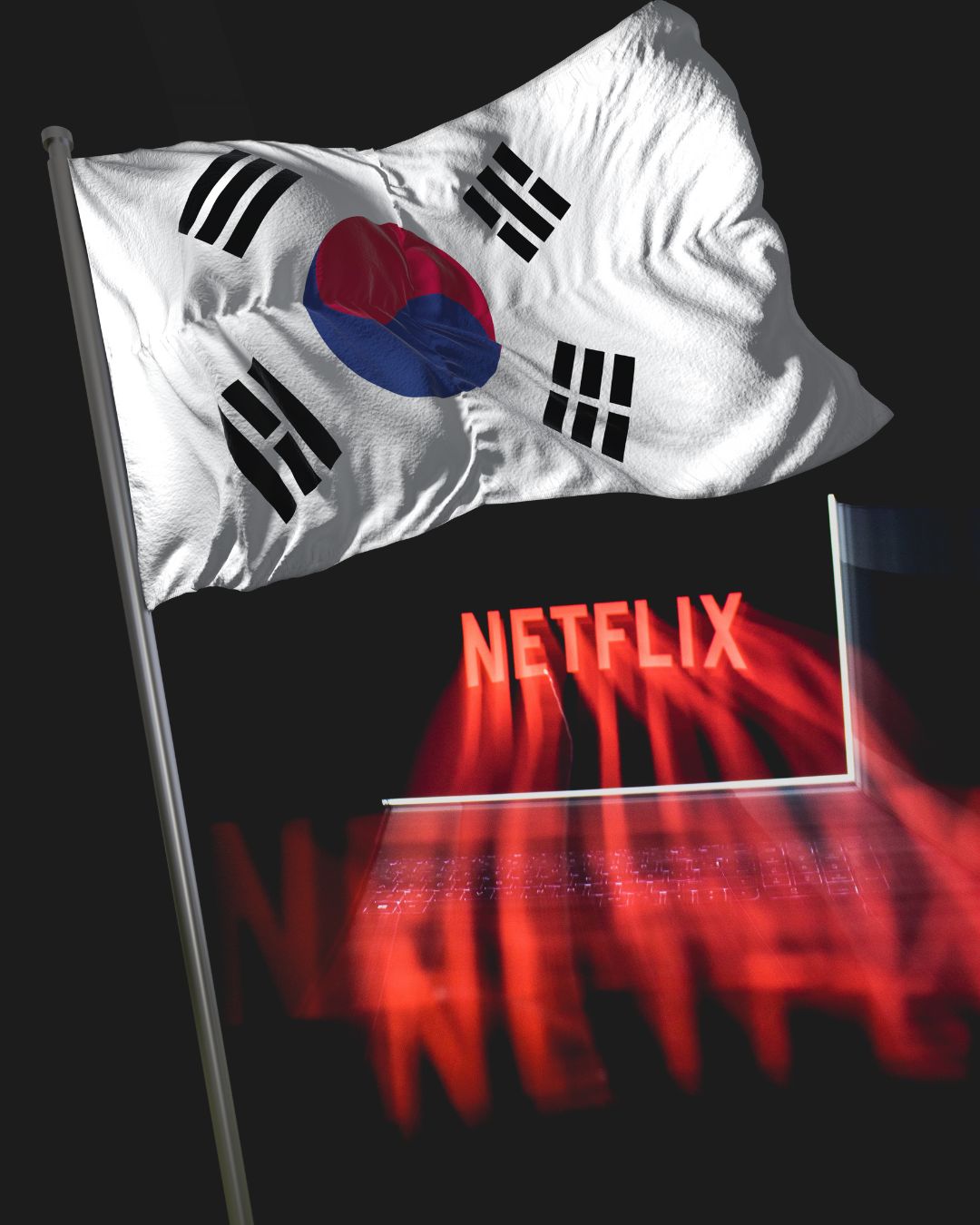
International Journal of Communication Publishes a Special Section: Is Netflix Riding the Korean Wave or Vice Versa?

International Journal of Communication Publishes a Special Section: Is Netflix Riding the Korean Wave or Vice Versa?


As exemplified by the success of several Netflix originals, such as Squid Game, Kingdom, All of Us Are Dead, The Glory, and Jung E, Netflix is riding the Korean Wave. Korean cultural content is also jumping on the Netflix Bandwagon. The close collaboration between these seemingly unrelated cultural powerhouses, one originating from a non-Western and the other from a Western context, foregrounds the following question: What will be the power relationships in cultural production between global and local forces in the digital platform era?

Guest-edited by Dal Yong Jin, Sangjoon Lee, and Seok-Kyeong Hong, this Special Section—Is Netflix Riding the Korean Wave or Vice Versa?aims to provide a better understanding of the ways in which Netflix has influenced the local cultural industries in terms of the shift in cultural genres and industry structure. The authors present works from critical studies, cultural studies, and  platform studies perspectives, partly using Squid Game—one of the most famous Netflix originals—to anchor their analyses. These authors articulate ways in which local cultural industries change their production norms to comply with Netflix’s orientation and map out the shift in the standard of cultural production, which changes the cultural text. Some authors also delve into the extent to which global platforms destroy local specificities and identities, both culturally and structurally.

Together, the contributions to this Special Section interrogate shifting power relationships between a global OTT (over-the-top) platform and local players, including cultural creators and platform users, and the implications of Netflix’s influence on the Korean cultural industries. They stress the platformization of cultural industries as well as the limits placed on global OTT platforms by the unique qualities of popular culture, cultural production, and the reception of cultural texts. 

We invite you to read these articles that published in the International Journal of Communication on November 14, 2023. Please log into ijoc.org to read the papers of interest. We look forward to your feedback! 
____________________________________________________________________________________

Netflix and the Global Receptions of Korean Popular Culture: Transnational Perspectives—Introduction 
Dal Yong Jin, Sangjoon Lee, Seok-Kyeong Hong

Critical Cultural Industries Studies: A New Approach to the Korean Wave in the Netflix Era 
Dal Yong Jin

Questioning Platform-Driven Diversity: Diasporic Korean Storytelling on Netflix
Kyong Yoon

Netflix Korea and Platform Creativity
Benjamin M. Han 

Reshaping Hallyu: Global Reception of South Korean Content on Netflix
Sojeong Park, Seok-Kyeong Hong 

Squid Game as a Levinasian Morality Tale: The Ethics of Alterity and Empathy in a Survival-Game  Narrative 
Hye Seung Chung

Third-Space K-Drama: Netflix, Hallyu, and the Melodramatic Mundane 
Yin Yuan

Duality of K-Content in the Era of Netflix: An Investigation of Korean “Netflix Original” Characteristics
Kristin April Kim, Ji Hoon Park, Sola Yoon, Yue Wang, Hayoung Bae, Kieu Trang Luc

Transversal Korean Waves: Speculating on the Next Wave with Netflix and Korean Gaming
Tae-Jin Yoon, Yaewon Jin

Kingdom Cultures: Zombie Growth and Netflix Korea
Joseph Jonghyun Jeon
____________________________________________________________________________________
Larry Gross, Editor
Kady Bell-Garcia, Managing Editor
Chi Zhang, Managing Editor, Special Sections
Dal Yong Jin, Sangjoon Lee, Seok-Kyeong Hong, Guest Editors

Please note that according to the latest Google Scholar statistics, IJoC ranks 7th among all Humanities journals and 8th among all Communications journals in the world — demonstrating the viability of open access scholarly publication at the highest level.