International Journal of Communication Publishes a Forum on Sociotechnical Change: Tracing Flows, Languages, and Stakes Across Diverse Cases

International Journal of Communication Publishes a Forum on Sociotechnical Change: Tracing Flows, Languages, and Stakes Across Diverse Cases

If change is the only constant, then what drives sociotechnical change? Who creates change within and through systems of humans and nonhumans? Which changes echo and repeat? Who suffers or benefits from change? What normative ideals guide hopes and fears of change?

Through empirically grounded, conceptually provocative, and wonderfully playful essays, this Forum on Sociotechnical Change: Tracing Flows, Language, and Stakes Across Diverse Cases, guest edited by Mike Ananny and Simogne Hudson, considers these questions and more by critically tracing different places where people and technologies meet. 

From studies of sports stadiums, homelessness counts, policing jaywalking, travel maps, and chicken farms to venture capitalism, refugee communities, climate crises, diasporic conflict, and autopen controversies, the forum offers not only unique case studies of change but also a larger story of how change emerges from messy but traceable collisions of people, practices, genealogies, representations, infrastructures, and values. 

Intended as provocations and starting points, the essays show how sociotechnical change is everywhere, and how the study of sociotechnical change can be interdisciplinary, playful, creative, and rigorous. 

Though authors come from different institutions and disciplines, they develop their projects through the University of Southern California’s collective MASTS (Media As SocioTechnical Systems), an interdisciplinary initiative fostering convivial exploration and collaboration across historically siloed schools, departments, methods, and traditions. 

We invite you to read these articles that published in the International Journal of Communication on January 1, 2024. Please log into ijoc.org to read the papers of interest. We look forward to your feedback!  
_______________________________________________________________________

Creating a Language of and for Sociotechnical Change: Interdisciplinary Sites, Stakes, and Senses of Transformation—Introduction
Mike Ananny, Simogne Hudson

From AAA TripTik to Google: Maps as Sites of Sociotechnical Change
So Yun Ahn

Disautomated Realities in South Africa: Loadshedding, Poultry Death, and the Promises of Failure
Ziyaad Bhorat

Digital Nations and the Future of the Climate Crisis 
Alfonso Hegde

Plasticity: Accounting for Adaptation in Sociotechnical Systems
Renyi Hong

Humanitarian Innovation in Forced Displacement
Alphoncina Lyamuya

Digital Diaspora and Nationhood: Sociotechnical Imaginaries and Practices of Nationhood
Azeb Madebo

“A Fountain Pen Come to Life”: The Anxieties of the Autopen
Pegah Moradi, Karen Levy

The Stadium as Sociotechnical Change
Cerianne Robertson, Pratik Nyaupane

Structures of Capital and Sociotechnical Change: The Case of Tech Startups and Venture Capital
Benjamin Shestakofsky, Caitlin Petre

Counting on Stability: The Social Construction of the Los Angeles Homeless Count
Will Orr

Pedestrian Mobilities at the Crossroads: The Contestation and Regulation of Jaywalking
Josh Widera

_______________________________________________________________________

Silvio Waisbord, Editor 
Kady Bell-Garcia, Managing Editor
Chi Zhang, Managing Editor, Special Sections
Mark Mangoba-Agustin, Webmaster
Mike Ananny and Simogne Hudson, Guest Editors

Please note that according to the latest Google Scholar statistics, IJoC ranks 7th among all Humanities journals and 8th among all Communications journals in the world — demonstrating the viability of open access scholarly publication at the highest level.
International Journal of Communication Publishes a Special Section on Rethinking Artificial Intelligence: Algorithmic Bias and Ethical Issues

International Journal of Communication Publishes a Special Section on Rethinking Artificial Intelligence: Algorithmic Bias and Ethical Issues

Artificial Intelligence (AI) technologies and applications have rapidly penetrated all aspects of social, political, civic, and cultural life. Despite the exponential growth in and development of AI, algorithmic bias toward gender, age, sexuality, race/ethnicity, and ideology prevails across digital media platforms, ranging from search engines through news sites to social media platforms and generative AI such as ChatGPT. This omnipresence of algorithmic bias results in social issues, such as systematic and repeated unfairness, discrimination, and inequality, privileging certain groups over others, and reinforcing social and cultural biases.

While scholarship in this domain is burgeoning, the causes, components, and consequences of algorithmic bias and ethical issues remain underexplored. Guest-edited by Seungahn Nah and Jungseock Joo, this Special Section on Rethinking Artificial Intelligence: Algorithmic Bias and Ethical Issues addresses longstanding problems regarding algorithmic bias and ethical issues, affecting individuals, groups, communities, and countries across socioeconomic and ideological spectrums. In doing so, the Special Section emphasizes an inextricably interwoven relationship among data and media bias, model bias, and social bias. That is, data and media bias leads to unbalanced training resulting in model bias. Model bias, in turn, reinforces data and media bias and produces discriminatory impact on individuals and society. Human and societal bias then produces skewed representation and participation in data and media bias. This “vicious circle” reinforces bias in the development, use, and application of AI systems. 

The Special Section encompasses a wide range of studies that revisit algorithmic bias in relations to gender, race, data, news, and decision-making. It empirically examines related topics such as algorithmic auditing, algorithmic framing, algorithmic aversion, and algoactivism. The Special Section further stimulates intellectual dialogues for scholars, policymakers, and practitioners to reconsider algorithmic bias in the age of AI.

We invite you to read these articles that published in the International Journal of Communication on January 1, 2024. Please log into ijoc.org to read the papers of interest. We look forward to your feedback!  

Mapping Scholarship on Algorithmic Bias: Conceptualization, Empirical Results, and Ethical Concerns 
Seungahn Nah, Jun Luo, Jungseock Joo

How Gender and Type of Algorithmic Group Discrimination Influence Ratings of Algorithmic Decision Making 
Sonja Utz

The Realientation of the Commons: Wikidata and the Ethics of “Free” Data
Zachary J. McDowell, Matthew A. Vetter

Rage Against the Artificial Intelligence? Understanding Contextuality of Algorithm Aversion and Appreciation
Tessa Oomen, João Gonçalves, Anouk Mols 

Making Algorithms Public: Reimagining Auditing From Matters of Fact to Matters of Concern
R. Stuart Geiger, Udayan Tandon, Anoolia Gakhokidze, Lian Song, Lilly Irani

How Process Experts Enable and Constrain Fairness in AI-Driven Hiring
Ignacio Fernandez Cruz

Questioning Artificial Intelligence: How Racial Identity Shapes the Perceptions of Algorithmic Bias
Soojong Kim, Joomi Lee, Poong Oh

Algorithmic Bias or Algorithmic Reconstruction? A Comparative Analysis Between AI News and Human News
Seungahn Nah, Jun Luo, Seungbae Kim, Mo Chen, Renee Mitson, Jungseock Joo

___________________________________________________________________________________

Silvio Waisbord, Editor
Kady Bell-Garcia, Managing Editor
Chi Zhang, Managing Editor, Special Sections
Mark Mangoba-Agustin, Webmaster
Seungahn Nah and Jungseock Joo, Guest Editors

Please note that according to the latest Google Scholar statistics, IJoC ranks 7th among all Humanities journals and 8th among all Communications journals in the world — demonstrating the viability of open access scholarly publication at the highest level

International Journal of Communication invites you to read these 41 papers that published in November

International Journal of Communication invites you to read these 41 papers that published in November

The International Journal of Communication is pleased to announce the publication of 41 papers in NOVEMBER 2023, which includes the “Special Section on Is Netflix Riding the Korean Wave or Vice Versa.” To access these papers, Ctrl+Click on the titles below for direct hyperlinking, or go to ijoc.org to read the Special Section.
_______________________________________________________________________

ARTICLES

War Propaganda Unfolded: Comparative Effectiveness of Propaganda and Counterpropaganda in Russia’s Invasion of Ukraine
Anton Oleinik, Volodymyr Paniotto

One Big Store: Source Diversity and Value Capture of Digital Games in National App Store Instances
Daniel Joseph, David Nieborg, Chris J. Young

Opinion Extremity Predicted by Media Exposure, Information Processing Mode, and Issue Sophistication About U.S.–China Trade Dispute
Yaxin Dai, Xigen Li 

Outcomes and Affordances: Examining why People use Encryption
Shannon M. Oltmann

The Impact of Trust in the Government on Willingness to Disclose Personal Data in Hong Kong: The Moderating Role of COVID-19 Infection Concern in the Data Disclosure Mediation Model
Chun Hong Tse, Marko M. Skoric

Developing on Shifting Sands: A Case Study of a Workplace Safety Monitoring App During the COVID-19 Pandemic
Jacob Johanssen, Iman Naja, Lamiece Hassan, Carl Adams, Mistale Taylor 

BTS’s Pandemic Hits and Their Implications: Discursive Re-vitalization of Neoliberal Hegemony in K-pop Industry
Gooyong Kim

Restorative Power of Empathetic Communication for Participatory Governance and Community Well-Being
Himani Sharma, Varsha Jain, Emmanuel Mogaji, Anantha Babbili

Motives for Following Social Influencers and Electronic Word-of-Mouth: The Role of Social Capital
Yoojung Kim, Soojin Kim 

Montevideo Convention and CGTN: Defining Statehood for Global Outreach 
Keyu Alexander Chen, Virginia Massignan, Mor Yachin, Carol Kay Winkler, Ayse Deniz Lokmanoglu

Television Continues to Cultivate Attitudes Toward Homosexuality, but Only Among Politically Conservative Individuals and Women: Evidence from U.S. General Social Survey Data 
Lik Sam Chan, Zurong Liang

The Lives of Others: Unauthorized Depictions of Public Figures in U.S. Film and TV Drama
Jonathan Stubbs

Unveiling Gatekeeping Practices in Mobile Environments: A Comparative Analysis of Operating Systems and App Gardens
Juan Ortiz Freuler

Staying Tuned for Censored Information Sources? A Media Habit Approach to Immigrants’ Information Practices
Abby Youran Qin

Quantifying Public Value Creation by Public Service Media Using Big Programming Data
Indrek Ibrus, Andres Karjus, Vejune Zemaityte, Ulrike Rohn, Maximilian Schich

Politicization and Right-Wing Normalization on YouTube: A Topic-Based Analysis of the “Alternative Influence Network”
Curd Benjamin Knüpfer, Carsten Schwemmer, Annett Heft 

Capturing the Media: Similarities Between Viktor Orbán’s and Donald Trump’s Media Aspirations
Adam Klein

Dynamics of Content Diversity Within Issues, Across Platforms: A Pesticide Debate in the News and on Twitter 
Anke Wonneberger, Sandra Jacobs, Iina Hellsten

Productive Power in Digital Constitutionalism: Analyzing Civil Society Actors’ Definitions of Digital Rights
Outi Puukko

Fake or Fact? Factors Predicting the Capability of Recipients to Assess the Truthfulness of Impactful News
Johanna Radechovsky

The Domestication of Netflix in the Gulf
Bouziane Zaid, Mohamed Benmoussa, Khayrat Ayyad, Mohammed Ibahrine,
Abdelmalek El Kadoussi

Examining the Mobilizing Effect of Populist Political Communication: A Survey Experiment of Populist Communication Style Across Three Policy Issues
Signe Ringdal Bergan

Sharing News About COVID-19: Media Exposure, Self-Perceived Knowledge, and the Gap of Perceived Susceptibility of Self/Strangers
Yihan Li, Han Fu


FEATURE

Coverage of the Russia–Ukraine War by Television News
Kaarle Nordenstreng, Svetlana Pasti, Tao Zhang, Savyasaachi Jain, Giuliano Bobba, Henry Wolgast, Aaron Hyzen, Liziane Soares Guazina,
Suchitra Patnaik, Musawenkosi Ndlovu


BOOK REVIEWS

Lin Zhang, The Labor of Reinvention: Entrepreneurship in the New Chinese Digital Economy 
Alberto Lusoli 

Sara Liao, Fashioning China: Precarious Creativity and Women Designers in Shanzhai Culture
Qiuying Zhao

Siegfried Kracauer, Jaeho Kang, Graeme Gilloch, and John Abromeit (Eds.), Selected Writings on Media, Propaganda, and Political Communication
Aaron Hyzen

Amy D. Propen, At Home in the Anthropocene 
Trish Morgan

Camilla Fojas, Border Optics: Surveillance Cultures on the US–Mexico Frontier
João C. Magalhães

D. Bondy Valdovinos Kaye, Jing Zeng, and Patrik Wikström, TikTok: Creativity and Culture in Short Video
Liangwen Kuo

Eli M. Noam, Media and Digital Management
Paschal Preston 

_______________________________________________________________________
Larry Gross, Editor
Kady Bell-Garcia, Managing Editor
Chi Zhang, Managing Editor, Special Sections

Please note that according to the latest Google Scholar statistics, IJoC ranks 7th among all Humanities journals and 8th among all Communications journals in the world — demonstrating the viability of open access scholarly publication at the highest level. 

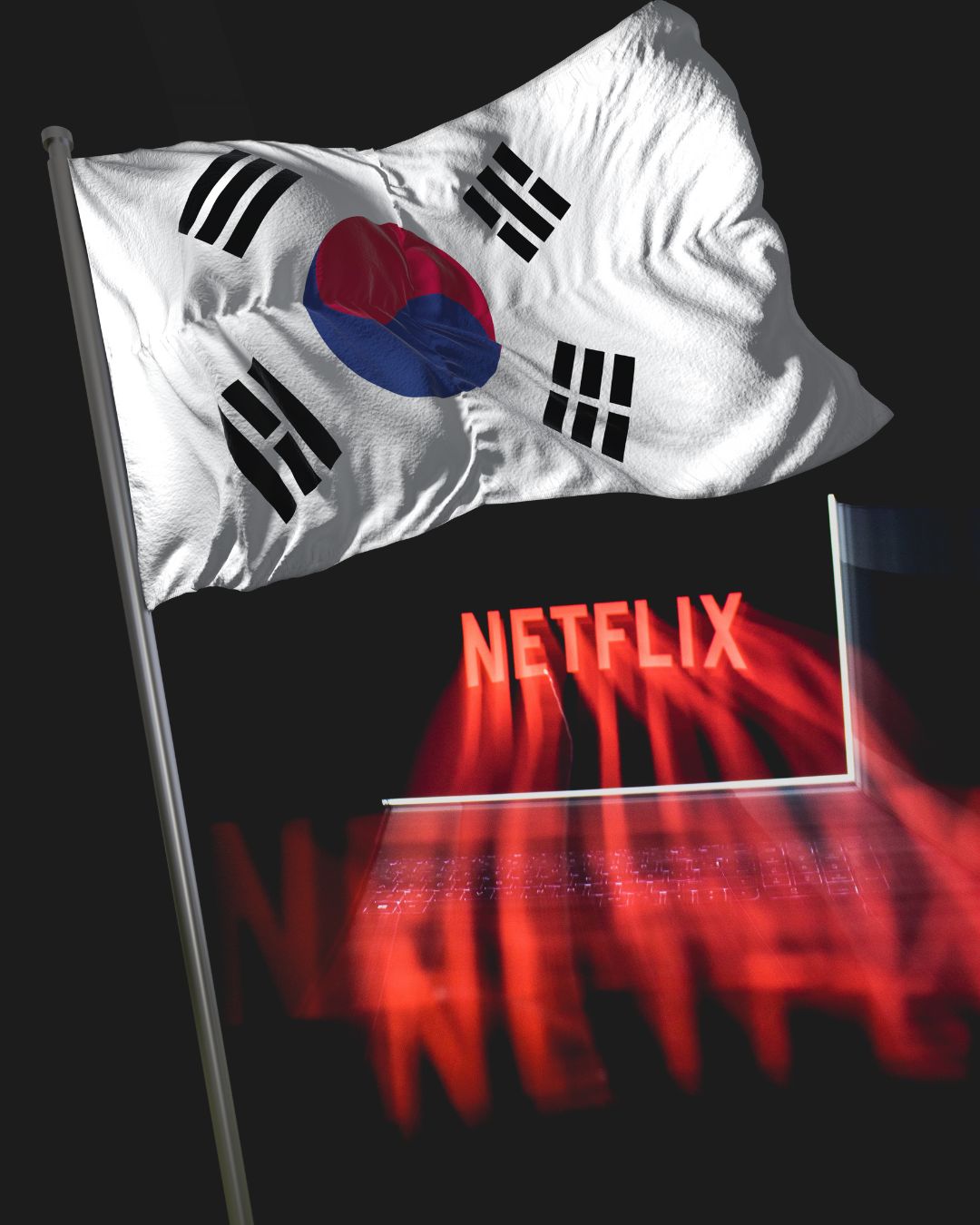
International Journal of Communication Publishes a Special Section: Is Netflix Riding the Korean Wave or Vice Versa?

International Journal of Communication Publishes a Special Section: Is Netflix Riding the Korean Wave or Vice Versa?


As exemplified by the success of several Netflix originals, such as Squid Game, Kingdom, All of Us Are Dead, The Glory, and Jung E, Netflix is riding the Korean Wave. Korean cultural content is also jumping on the Netflix Bandwagon. The close collaboration between these seemingly unrelated cultural powerhouses, one originating from a non-Western and the other from a Western context, foregrounds the following question: What will be the power relationships in cultural production between global and local forces in the digital platform era?

Guest-edited by Dal Yong Jin, Sangjoon Lee, and Seok-Kyeong Hong, this Special Section—Is Netflix Riding the Korean Wave or Vice Versa?aims to provide a better understanding of the ways in which Netflix has influenced the local cultural industries in terms of the shift in cultural genres and industry structure. The authors present works from critical studies, cultural studies, and  platform studies perspectives, partly using Squid Game—one of the most famous Netflix originals—to anchor their analyses. These authors articulate ways in which local cultural industries change their production norms to comply with Netflix’s orientation and map out the shift in the standard of cultural production, which changes the cultural text. Some authors also delve into the extent to which global platforms destroy local specificities and identities, both culturally and structurally.

Together, the contributions to this Special Section interrogate shifting power relationships between a global OTT (over-the-top) platform and local players, including cultural creators and platform users, and the implications of Netflix’s influence on the Korean cultural industries. They stress the platformization of cultural industries as well as the limits placed on global OTT platforms by the unique qualities of popular culture, cultural production, and the reception of cultural texts. 

We invite you to read these articles that published in the International Journal of Communication on November 14, 2023. Please log into ijoc.org to read the papers of interest. We look forward to your feedback! 
____________________________________________________________________________________

Netflix and the Global Receptions of Korean Popular Culture: Transnational Perspectives—Introduction 
Dal Yong Jin, Sangjoon Lee, Seok-Kyeong Hong

Critical Cultural Industries Studies: A New Approach to the Korean Wave in the Netflix Era 
Dal Yong Jin

Questioning Platform-Driven Diversity: Diasporic Korean Storytelling on Netflix
Kyong Yoon

Netflix Korea and Platform Creativity
Benjamin M. Han 

Reshaping Hallyu: Global Reception of South Korean Content on Netflix
Sojeong Park, Seok-Kyeong Hong 

Squid Game as a Levinasian Morality Tale: The Ethics of Alterity and Empathy in a Survival-Game  Narrative 
Hye Seung Chung

Third-Space K-Drama: Netflix, Hallyu, and the Melodramatic Mundane 
Yin Yuan

Duality of K-Content in the Era of Netflix: An Investigation of Korean “Netflix Original” Characteristics
Kristin April Kim, Ji Hoon Park, Sola Yoon, Yue Wang, Hayoung Bae, Kieu Trang Luc

Transversal Korean Waves: Speculating on the Next Wave with Netflix and Korean Gaming
Tae-Jin Yoon, Yaewon Jin

Kingdom Cultures: Zombie Growth and Netflix Korea
Joseph Jonghyun Jeon
____________________________________________________________________________________
Larry Gross, Editor
Kady Bell-Garcia, Managing Editor
Chi Zhang, Managing Editor, Special Sections
Dal Yong Jin, Sangjoon Lee, Seok-Kyeong Hong, Guest Editors

Please note that according to the latest Google Scholar statistics, IJoC ranks 7th among all Humanities journals and 8th among all Communications journals in the world — demonstrating the viability of open access scholarly publication at the highest level. 

International Journal of Communication invites you to read these 30 papers that published in October

International Journal of Communication invites you to read these 30 papers that published in October

The International Journal of Communication is pleased to announce the publication of 30 papers in OCTOBER 2023. To access these papers, Ctrl+Click on the titles below for direct hyperlinking.
_______________________________________________________________________

ARTICLES

Unpacking the Stances and Affects in Weibo Comments on the Policy of Same-Sex Guardianship Agreements in China
Xuekun Liu

Hating Theory: “Cultural Marxism,” “CRT,” and the Power of Media Affects
Moira Weigel

A Revealing “Confession” or Another Publicity Stunt? Reflections on Social Media Entrepreneurship on Weibo 
Qingyue Sun

Engaging Audiences With Local News: Can Solutions Journalism Be a Solution to Local Media Crisis?
Noha Mellor, An Nguyen

“I’m Not Just a Content Creator”: Digital Cultural Communicators Dealing With Celebrity Capital and Online Communities
Isabel Villegas-Simón, Ona Anglada-Pujol, María Castellví Lloveras, Mercè Oliva

The Hate Office? Bolsonaro’s Discourse and COVID-19 Online Disinformation
Ricardo Ribeiro Ferreira, Juliana Alcantara

A Pandemic Silver Lining: Remote Learning and Increased Intergenerational Technology Guidance Within Lower-Income Families
Bianca C. Reisdorf, Vikki S. Katz

Platforms as Cultural Infrastructures: Identity-Making Practices of WeChat and KakaoTalk in the Diaspora
Jane Yeahin Pyo, Jingyi Gu

Enjoyment of Murder Mystery Game Reality Shows: The Influence of Affective Disposition, Suspense and Parasocial Interactions
Li Zhi, Fei Fan, Wei Jiang

“Meme-Ing” Peace in Northern Ireland: Exploring the Everyday Politics of Internet Memes in Belfast Riots
Ivan Gusic, Martin Lundqvist

It’s Nothing but a Deepfake! The Effects of Misinformation and Deepfake Labels Delegitimizing an Authentic Political Speech
Michael Hameleers, Franziska Marquart

Russian Troll Social Media Attacks on Presidential Candidates During the 2016 U.S. Election: The Role of Frontrunner Status, Political Party, and Candidate Gender
Larissa Terán, Heather Gahler, Daniel Montez, Kate Kenski, Stephen A. Rains

Communication Network Characteristics of the Mass Entrepreneurship and Innovation Policy on Social Media: A Social Network Analysis
Zenglei Yue, Guang Yu, Jing Shan, Guangwu Liu, Lie Chen, Donghui Yang

Humans vs. AI: The Role of Trust, Political Attitudes, and Individual Characteristics on Perceptions About Automated Decision Making Across Europe
Theo Araujo, Anna Brosius, Andreas C. Goldberg, Judith Möller, Claes de Vreese

What Changed During COVID-19? How the COVID-19 Crisis Changed Parental Perceptions and Practices Related to Children’s Internet Use in Five European Countries
Beatrice Sciacca, Christine W. Trültzsch-Wijnen, Anca Velicu, Patricia Dias, Tijana Milosevic, Elisabeth Staksrud

Elite Hostility Toward Journalism, News Trust, and the Mediating Role of Fear for Motivating Public Support of News Media
Jason T. Peifer, Alexis Haskell

Between “Me, Myself, and I” and the “Royal We”: Gender Differences in Personalized Political Discourse on Facebook and User Involvement
Renana Atia, Meital Balmas

Engaged and Uncivil? Incivility and Engagement on Twitter Over a Televised Presidential Debate in Chile
Andrés Rosenberg, Magdalena Saldaña, William Porath

BOOK REVIEWS

Saskia Warren, British Muslim Women in the Cultural and Creative Industries
Noha Mellor

Kate Fortmueller, Below the Stars: How the Labor of Working Actors and Extras Shapes Media Production
Kristina Brüning

Sarah Lamdan, Data Cartels: The Companies That Control and Monopolize Our Information
Sue Curry Jansen

Guillaume Pitron, The Dark Cloud: How the Digital World Is Costing the Earth 
Thomas Klikauer 

Marianne Kac-Vergne and Julie Assouly (Eds.), From the Margins to the Mainstream: Women in Film and Television 
Olivia A. González 

Richard M. Perloff, The Dynamics of News: Journalism in the 21st-Century Media Milieu
Bingbing Zhang

David H. Kahl Jr. and Ahmet Atay (Eds.), Pedagogies of Post-Truth 
Noah Zweig

Lauren B. Frank and Paul Falzone (Eds.), Entertainment-Education Behind the Scenes: Case Studies for Theory and Practice 
Neelam Sharma

Sara Polak and Daniel Trottier (Eds.), Violence and Trolling on Social Media: History, Affect, and Effects of Online Vitriol
Luca Follis

David Beer, The Tensions of Algorithmic Thinking: Automation, Intelligence and the Politics of Knowing
Haktan Ural

Summer Harlow, Digital-Native News and the Remaking of Latin American Mainstream and Alternative Journalism
Darsana Vijay

Linda Aldoory and Elizabeth L. Toth, The Future of Feminism in Public Relations and Strategic Communication: A Socio-Ecological Model of Influences
Lia Grabowski 

_______________________________________________________________________
Larry Gross, Editor
Kady Bell-Garcia, Managing Editor
Chi Zhang, Managing Editor, Special Sections

Please note that according to the latest Google Scholar statistics, IJoC ranks 7th among all Humanities journals and 8th among all Communications journals in the world — demonstrating the viability of open access scholarly publication at the highest level.