International Journal of Communication Announces the Publication of 23 Papers that Published in APRIL

International Journal of Communication invites you to read these 23 publications that published in April

The International Journal of Communication is pleased to announce the publication of 23 papers in April 2024. Please log into ijoc.org to read the papers of interest.

_______________________________________________________________________

ARTICLES

Search Engines as “Globalizing Machines”: International News Flow Through Google During the 2020 Belarusian Presidential Election
Daria Kravets

Analysis of Peruvian Newspaper Portrayal of Chinese Foreign Direct Investments From 2001 to 2020: An Exploration of Factors Influencing International Economic News Reporting 
Longxing Wang, Yicheng Zhu, Juan Diego Zamudio Padilla, Ruitong Huang, Zejia Bi, Yue Shu, Haoyi Chen

The Effects of Elihu Katz: A Stepwise Enrichment of the Concept of Communication Effects 
Klaus Bruhn Jensen, W. Russell Neuman

Nationalism for Sale? Transnational Capital, Gender Politics, and Policing the Patriots in Digital Platform
Sara Liao, Lin Sun 

Perceptions of Opinion Climate in Online Comments and Among the General Public: Examining the Roles of Personal Opinion, Political Knowledge, and Comment Reading
Ki Deuk Hyun, Nakwon Jung, Mihye Seo

How Do Individuals With Conspiracy Beliefs Respond to Humorous Public Service Announcements Promoting COVID-19 Vaccination? The Role of Scientific Consensus and Vaccine Confidence
Jeong-Yeob Han, Hanyoung Kim, Hye Jin Yoon, Ja Kyung Seo

African Media Portrayals of the 1994 Genocide Against the Tutsi 
Brooke Chambers, j. Siguru Wahutu

Blurring Social Order With Public Sentiment: Governing Online Disinformation Through Criminal Penalty in China
Tingting Li, Daniel C. Hallin 

Disinformation Perceptions and Media Trust: The Moderating Roles of Political Trust and Values 
Francis L. F. Lee

The Role of News Sharing in Curbing the Negative Impact of Misperceptions on Prosocial Behavior During the COVID-19 Pandemic
Jihyang Choi, Jiyoung Lee, Hae Jung Oh

On Digital Media Risks, Intensive Parenting, and Glocal Tensions: Public Discourse and Parents’ Experiences in Vietnam 
Becky Pham

Legitimation, Authenticity, and Communicative Entitlement in YouTube “Lifestyle” Vlogs: The Case of “Hygge”
Will Gibson, Elisabeth Muth Andersen

Were Online Media Biased? An Assessment of Statement and Actor Bias During the 2015 Referendum in Greece
Paschalia (Lia) Spyridou, Vasiliki Triga, Dimitra L. Milioni

Engaging With the Oscar-Winning Parasite on Social Media: Intercultural Use of Country-of-Origin Frames
Dam Hee Kim, Kyung Jung Han, Sungchul Lee

BOOK REVIEWS 

Rasmus Kleis Nielsen and Sarah Anne Ganter, The Power of Platforms: Shaping Media and Society 
Gayoung Jeon

ShinJoung Yeo, Behind the Search Box: Google and the Global Internet Industry 
Shumaila J. Bhatti

Istvan Kecskes (Ed.), The Cambridge Handbook of Intercultural Pragmatics 
Xiaoyu Lai 

Jean Burgess, Kath Albury, Anthony McCosker, and Rowan Wilken, Everyday Data Cultures
Karin Bogdanova

Aaron Trammell, Repairing Play: A Black Phenomenology
Kishonna L. Gray 

Hsin-I Cheng and Hsin-i Sydney Yueh (Eds.), Resistance in the Era of Nationalisms: Performing Identities in Taiwan and Hong Kong
Zhengqing Yan, Haiyan Wang 

Screen Time
Anna P. Wald

Sarah Banet-Weiser and Kathryn Claire Higgins, Believability: Sexual Violence, Media, and the Politics of Doubt 
Jilly Boyce Kay 

Alice E. Marwick, The Private Is Political: Networked Privacy and Social Media 
Paulo Carvão

_______________________________________________________________________

Silvio Waisbord, Editor 
Kady Bell-Garcia, Managing Editor
Chi Zhang, Managing Editor, Special Sections
Mark Mangoba-Agustin, Webmaster

Please note that according to the latest Google Scholar statistics, IJoC ranks 7th among all Humanities journals and 8th among all Communications journals in the world — demonstrating the viability of open access scholarly publication at the highest level. 

International Journal of Communication Announces the Publication of 22 Papers that Published in MARCH 

International Journal of Communication invites you to read these 22 publications that published in MARCH

The International Journal of Communication is pleased to announce the publication of 22 papers in MARCH 2024. Please log into ijoc.org to read the papers of interest.

_______________________________________________________________________

ARTICLES 

Why Do Some Shout and Others Stay Silent? Communication Context Consistency in Political Discourse Offline and on Facebook 
Carrie Anne Platt, Don Waisanen, Jose Marichal  

Meaning Cocreation and Social Influencers in a Digital Racial Crisis A Social Network Analysis of Starbucks’s Racial Crisis in Philadelphia 
Ying Xiong, Moonhee Cho  

Self-Deprecating Cyberculture on TikTok: Experiences of Young Indonesians 
Anindita Widiastuti, Atwar Bajari, Ira Mirawati 

#WhatsHappeningInMyanmar: The Evolution of the Digital Fight Against Authoritarian State Repression 
Tuwanont Phattharathanasut  

Local Production for Global Streamers: How Netflix Shapes European Production Cultures 
Daphne Rena Idiz  

Researching Social Media and Activism With Children and Youth: A Scoping Review 
Annamária Neag, Markéta Supa, Paul Mihailidis 

Impact of Media and Culture on Constructions of Homomasculinity Among Gay and Queer Men in Aotearoa New Zealand 
Martin Kaulback, Elena Maydell 

Dehumanized in Death: Representations of Murdered Women in American True Crime Podcasts 
Jessica Lang, Audrey Alejandro 

Is Communication Visibility a Threat or an Opportunity? Social Media and Anonymous Social Support Organizations 
Katie K. Kang 

FEATURE  
 
What Is the Value of Cultural Analytics? Discerning Value in Digital Environments 
Jonathon Hutchinson 

BOOK REVIEWS 

Djoymi Baker, Jessica Balanzategui, and Diana Sandars, Netflix, Dark Fantastic Genres and Intergenerational Viewing: Family Watch Together TV 
Gina Junhan Fu 

Emiliana Armano, Marco Briziarelli, and Elisabetta Risi (Eds.), Digital Platforms and Algorithmic Subjectivities 
Aiden James Kosciesza 

Martina Topić (Ed.), Women and the Media in Capitalism and Socialism: An Ecofeminist Inquiry 
Jing Cai 

Karen Frost-Arnold, Who Should We Be Online? A Social Epistemology for the Internet 
Liting Lu 

Minna Ruckenstein,The Feel of Algorithms 
Katalin Feher 

Robert Lawson, Language and Mediated Masculinities: Cultures, Contexts, Constraints 
Yiming Wang 

Roselyn Du,Algorithmic Audience in the Age of Artificial Intelligence: Tailored Communication, Information Cocoons, Algorithmic Literacy, and News Literacy 
Arjen van Dalen 

Omar Sayfo, Arab Animation: Images of Identity 
Yazan Badran 

Lois M. DeFleur, Sandra Ball-Rokeach, and Marilyn Ihinger-Tallman, We Few, We Academic Sisters: How We Persevered and Excelled in Higher Education (Betty Houchin Winfield, Ed.) 
Gaye Tuchman 
 
Dan Bouk, Democracy’s Data: The Hidden Stories in the U.S. Census and How to Read Them 
Emilia Ruzicka 

Mike Piero, Video Game Chronotopes and Social Justice: Playing on the Threshold 
Sabrina Sonner 

Jennifer Clary-Lemon and David M. Grant (Eds.), Decolonial Conversations in Posthuman and New Material Rhetorics 
Fatima Zahid Ali 

_______________________________________________________________________

Silvio Waisbord, Editor 
Kady Bell-Garcia, Managing Editor
Chi Zhang, Managing Editor, Special Sections
Mark Mangoba-Agustin, Webmaster

Please note that according to the latest Google Scholar statistics, IJoC ranks 7th among all Humanities journals and 8th among all Communications journals in the world — demonstrating the viability of open access scholarly publication at the highest level. 
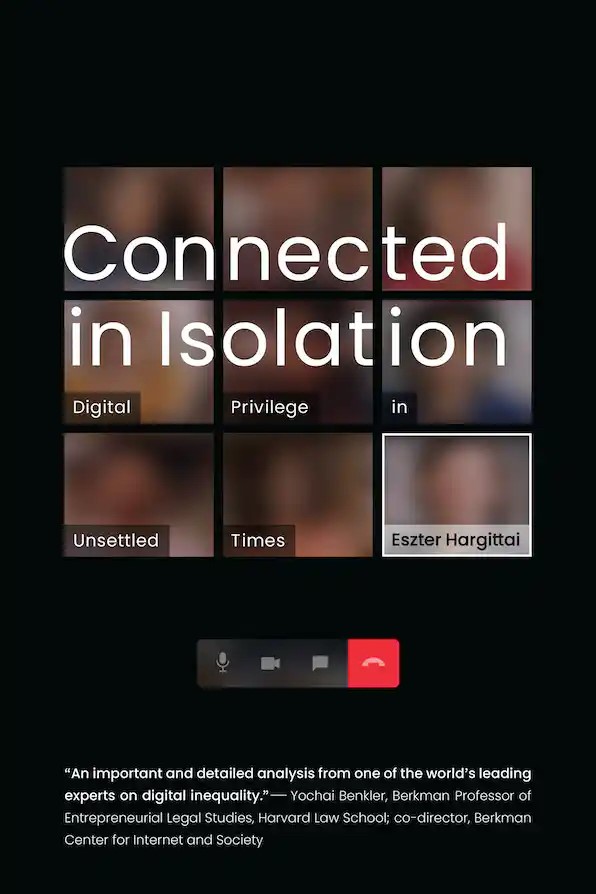
International Journal of Communication announces the publication of 53 papers that published in FEBRUARY

International Journal of Communication invites you to read these 53 publications that published in February

The International Journal of Communication is pleased to announce the publication of 53 papers in FEBRUARY 2024, which includes the “Book Review Forum on Eszter Hargittai’s Connected in Isolation.” To access these papers, Ctrl+Click on the titles below for direct hyperlinking, or go to ijoc.org to read the Forum.

_______________________________________________________________________

ARTICLES

The Making of Elihu Katz, 1926–1956: Generations and Ethnoreligious Identities in the Transnational Development of Communication Studies  
Peter Simonson  

Glittering Generalities: Reconsidering the Institute for Propaganda Analysis  
A.J. Bauer  

Do They Stop? How Do They Stop? Why Do They Stop? Whether, How, and Why Teens Insert “Frictions” Into Social Media’s Infinite Scroll  
Nikhila Natarajan  

In Dishonor of: The Assemblage of Counter-Memory as Networked Resistance on Twitter  
Fatima Gaw, Jon Benedik A. Bunquin  

Memories on Steel and Vinyl: The Northern Pacific Railway and the Sound of Memory  
Bryce D. Tellmann  

Mapping Chinese Digital Nationalism: A Literature Review  
Xiaoyu Zhang, Delia Dumitrica, Jeroen Jansz  

Physiological Response to Political Advertisement: Examining the Influence of Partisan and Issue Congruence on Attention and Emotion  
H. Denis Wu 

Digital Artivisms: Creative Practices, Digital Technologies, and Political Participation Among Young Portuguese Artivists  
Ricardo Campos, José Alberto Simões  

Jair Bolsonaro’s Populist Communication on Brazilian Television: An Analysis of Television Newscasts on Globo and Record During the COVID-19 Pandemic  
Bruno Araújo, Liziane Guazina  

Analyzing Media Representations of Terrorist Attacks Against Muslims: A Comparative Content Analysis of the Christchurch Mosque Attacks on BBC, Al Jazeera, and Al Arabiya Websites  
Fatima Abdul Rehman, Ruba Salma  

“They Are Amongst Us”: News About Islamist Terrorism, Perceptions of Sleeper Terrorists, and Negative Stereotypes Toward Muslims in the West 
Jörg Matthes, Ruta Kaskeleviciute  

Reviving the “Yellow Peril” Digitally: Anti-Asian Hate on Twitter During the COVID-19 Pandemic  
Fangjing Tu, Shanshan Jiang, Xue Gong  

Spoilers as Self-Protection: Investigating the Influence of Empathic Distress and Concern for the Self on Spoiler Selection  
Sarah E. Brookes, Judith E. Rosenbaum, Morgan E. Ellithorpe  

The First Spanish-Language Album to Reach Number One: El Último Tour del Mundo, Bad Bunny, and the Billboard 200 
Christopher Joseph Westgate  

How Chinese Women Cope With Physical and Psychological Traumas in Gynecological Examinations: A Situational Analysis of Patients’ Communicative Accommodation
Xinying Yang, Hongfeng Qiu 

Bibliometric Analysis on the Research Trend of Over the Top Platforms—Focusing on Social Science Research on Netflix From 2001 to 2020  
Xiaole Zhu, Yeajin Joo, Yoonjae Nam  
 
Debunking News as a Journalistic Genre: From the Inverted Pyramid to a Circular Writing Model 
Paula Herrero-Diz, David Varona-Aramburu, Marta Pérez-Escolar 
 
Intersectional Powers of Digital Repression: How Activists are Digitally Watched, Charged, and Stigmatized in Thailand  
Janjira Sombatpoonsiri 
  
Different Dimensions of Communicative Exchanges in Online Political Talk: Measuring Reciprocity Through Structures, Behaviors, and Discourses  
Tariq Choucair, Rousiley C. M. Maia  
 
That Is So Mainstream: The Impact of Hyper-Partisan Media Use and Right-, Left-Wing Alternative Media Repertoires on Consumers’ Belief in Political Misperceptions in the United States 
Brittany Shaughnessy, Myiah J. Hutchens, Eliana DuBosar 
 
Agenda-Setting Effects During Times of Social Disruption: The Influence of Mass Media and Personal Experiences on Societal Concerns  
Sophia Schaller, Dorothee Arlt, Jens Wolling 

Developing an Affordance-Practice Framework to Data Practices: How Civic Technologists Practice Data Literacy Cross-Regionally
Alejandro Alvarado Rojas 
 
From Information Poverty to Information Deficit: An Intersectional Analysis of Women of Color’s News Information-Seeking Habits in the Digital Age
Chelsea Peterson-Salahuddin
 
From Emancipation to Confusing the Nation: Social Media and Figurations of Disinformation a Decade After the Arab Uprisings
Nermin Elsherif, Tasniem Anwar 
 
Dual Impact of Tie Strength and Visibility of Action on Political Participation Types  
Simin Michelle Chen 
 
Unfair Competition: How States Use Disinformation to Exercise Public Diplomacy  
Juan Luis Manfredi 

Commodification of Spirituality and the Spiritual Healers’ Labor on Facebook  
Berit Renser, Katrin Tiidenberg  
 
From Cultivation to Self-Cultivation: Alternative Media and Reinforcing Spirals in a Fragmented Media Environment  
Angelica Cöster, Adam Shehata 

When Partisans Do Not Share Partisan News: Third-Person Effect in an Era of Polarized Politics
Seungsu Lee, Jaeho Cho

BOOK REVIEWS

Rules and Rivals: A Review Essay
Sue Curry Jansen

Leland G. Spencer, Rape, Agency, and Carceral Solutions: From Criminal Justice to Social Justice
Courtney D. Tabor 

David Goodman and Joy Elizabeth Hayes, New Deal Radio: The Educational Radio Project
David Elliot Berman 
 
Thomas Poell, David Nieborg, and Brooke Erin Duffy, Platforms and Cultural Production
Mustafa Oz 

Laine Nooney, The Apple II Age: How the Computer Became Personal
Rongxin Ouyang 

Lee McGuigan, Selling the American People: Advertising, Optimization, and the Origins of Adtech 
Jennifer Hessler 
 
Elyakim Kislev, Relationships 5.0: How AI, VR, and Robots Will Reshape Our Emotional Lives 
Jinyuan Zhan 

Sue Robinson, How Journalists Engage: A Theory of Trust Building, Identities, and Care  
Andrea Wenzel 

Aynne Kokas, Trafficking Data: How China Is Winning the Battle for Digital Sovereignty  
Jing Zeng 

Jeremy Packer, Paula Nuñez de Villavicencio, Alexander Monea, Kathleen Oswald, Kate Maddalena, and Joshua Reeves, The Prison House of the Circuit: Politics of Control from Analog to Digital  
Michelle Phan 

Patrick Ferrucci and Scott A. Eldridge II (Eds.), The Institutions Changing Journalism: Barbarians Inside the Gate  
Thomas R. Schmidt 

Senta Siewert, Performing Moving Images: Access, Archives and Affects  
Kelsey Moore 

Peiren Shao, New Perspectives on Geography of Media  
Yingzi Qu, Guofeng Wang 

Exploring Creativity Under Platform Capitalism   
Barry John King  

___________________________________________________________
Silvio Waisbord, Editor 
Kady Bell-Garcia, Managing Editor 
Chi Zhang, Managing Editor, Special Sections 
Mark Mangoba-Agustin, Webmaster 

Please note that according to the latest Google Scholar statistics, IJoC ranks 7th among all Humanities journals and 8th among all Communications journals in the world  — demonstrating the viability of open access scholarly publication at the highest level.  

International Journal of Communication Publishes a Book Review Forum on Eszter Hargittai’s Connected in Isolation

International Journal of Communication Publishes a Book Review Forum on Eszter Hargittai’s Connected in Isolation

One of the wonderful affordances of non-commercial online publishing is the ability to solicit and present contributions that fall outside the narrow confines of scholarly research articles. As one of IJoC’s core missions is to raise the profile (and increase the quantity) of book reviews, we have occasionally taken the opportunity provided by the publication of a provocative and timely book to invite a number of colleagues to reflect on the questions and issues raised by that work, followed by a response from the author. The recent publication of Eszter Hargittai’s Connected in Isolation: Digital Privilege in Unsettling Times was just such an occasion and our judgment was quickly confirmed by the enthusiasm of the colleagues we approached. Thus, it is indeed a pleasure for us to present a collection of insightful and stimulating responses to a book that is sure to become a milestone in contemporary media scholarship. 

The distinguished colleagues who have contributed to this forum are Paul DiMaggio, New York University; Hyunjin Seo, University of Kansas; Daniel Kreiss, University of North Carolina at Chapel Hill; Amy Gonzales, University of California, Santa Barbara; Lee Humphreys, Cornell University; Teresa Correa, Universidad Diego Portales; Dmitry Epstein, The Hebrew University of Jerusalem; Kevin Munger, Pennsylvania State University; and Gerard Goggin, University of Sydney and Victor Kuansong Zhuang, National Technological University.

On a personal note, as the now-retired founding editor of IJoC, I am particularly pleased that this Forum is among my final editorial tasks, as it represents many of the qualities IJoC was intended to embody and that I am confident will be continued and strengthened by the current editor and our colleagues.

We invite you to read these articles that published in the International Journal of Communication on February 7, 2024. Please log into ijoc.org to read the papers of interest. We look forward to your feedback!  

Larry Gross
Founding Editor

_______________________________________________________________________

Studying the Fire From Inside the Burning Building: Reflections on Connected in Isolation by Eszter Hargittai
Paul DiMaggio

Reflections on Connected in Isolation
Hyunjin Seo

What Does it Mean to be Connected in Isolation?
Daniel Kreiss

What is 21st-Century Digital Autonomy? 
Amy Gonzales

Connected in Isolation: How Zoom Enabled Ritual Communication for the Digitally Privileged Duringthe Pandemic Lockdown
Lee Humphreys

Personal Reflections on Our Context and Cognitive Digital Skills
Teresa Correa

Exposed in Isolation
Dmitry Epstein

Temporality and Truth in Connected in Isolation
Kevin Munger

Disability and Digital Connection in COVID-19 Times
Gerard Goggin, Kuansong Victor Zhuang

Increasing the Scope of Digital Inequality Research and Addressing Methodological Challenges:  A Response to Book Forum Contributions
Eszter Hargittai

_______________________________________________________________________

Silvio Waisbord, Editor 
Kady Bell-Garcia, Managing Editor
Chi Zhang, Managing Editor, Special Sections
Mark Mangoba-Agustin, Webmaster

Please note that according to the latest Google Scholar statistics, IJoC ranks 7th among all Humanities journals and 8th among all Communications journals in the world — demonstrating the viability of open access scholarly publication at the highest level. 

International Journal of Communication announces the publication of 85 papers that published in JANUARY

International Journal of Communication invites you to read these 85 publications that published in January

The International Journal of Communication is pleased to announce the publication of 85 papers in JANUARY 2024, which includes the “Special Section on Rethinking Artificial Intelligence: Algorithmic Bias and Ethical Issues” and the “Forum on Sociotechnical Change: Tracing Flows, Languages, and Stakes Across Diverse Cases.” To access these papers, Ctrl+Click on the titles below for direct hyperlinking, or go to ijoc.org to read the Special Section and Forum.

_______________________________________________________________________

EDITORIALS

Envoi: Looking Back With Pride and Looking Forward With Optimism
Larry Gross
 
Passing the Conductor’s Baton: The Score Remains the Same
Silvio Waisbord

ARTICLES

Communication Inequality and the Technopolitical Structure of Platform Work: Aotearoa New Zealand Platform Workers During COVID-19
Leon A. Salter, Mohan J. Dutta

The Heteronormative Male Gaze: Experiences of Sexual Content Moderation Among Queer Instagram Users in Berlin
Rachel Griffin

Using Radical Co-Design to Create and Develop a Technology-Based Solution to Improve Post-Release Outcomes for Formerly Incarcerated Women: LindaBot
Michele Jarldorn, Susannah Emery 

“O Ever Youthful, O Ever Weeping”: Exploring Youth Empowerment Through Platform-Dependent Creative Labor in China
Yunyi Hu

Vaccine Misinformation for Profit: Conspiratorial Wellness Influencers and the Monetization of Alternative Health
Rachel E. Moran, Anna L. Swan, Taylor Agajanian

Explicating the Effects of In- Versus Out-Group Membership and Collective Action Framing on Social Media Activism Messages
Chen Lou, Chelsea Ning Rei Yap, Xuan Zhou, Ji Ah Lim, Melody Tingyi Koh, Aik Tan

Platform Analogies: How Bookstores, Libraries, and Supermarkets Can Inform Thinking on Social Media
Caitlin Petre, Nicole Weber 

“Drop a Bomb on Them . . . and Problem Solved!” An Analysis of Poverty Discourse on TikTok 
Ana Mayagoitia-Soria, Juan Manuel González-Aguilar, Salvador Gómez-García, María Antonia Paz-Rebollo 

Scrolling Past Public Health Campaigns: Information Context Collapse on Social Media and Its Effects on Tobacco Information Recall
George D. H. Pearson, Joseph N. Cappella

Health Information Orientation, Social Support, and Diabetes Self-Care Behavior Among Indian Adults: The Roles of Education and Self-Efficacy
Yam Limbu, Devon Johnson, C. Jayachandran, Christopher J. McKinley, P. Raghunadha Reddy

Ethical Challenges of Digital Communication: A Comparative Study of Public Relations Practitioners in 52 Countries 
Jens Hagelstein, Sophia Charlotte Volk, Ansgar Zerfass, Andréia Silveira Athaydes, Jim Macnamara, Juan Meng, Chun-Ju Flora Hung-Baesecke 

Social Norms, Referent Group Specificity, and College Students’ COVID-19 Vaccination Intentions: Risk and Efficacy Perceptions as Boundary Conditions of Normative Influence
Jie Zhuang, Paul Schrodt, Mengfei Guan 

Network Informational Complexity, Epistemic Political Efficacy, and Fact-Checking
Toby Hopp 

Feeling Threatened and Thinking of Actions? Examining Consumers’ Responses to Corporate Social Advocacy Messages Through Intergroup Threat Perceptions
Xueying Zhang, Mei-Chen Lin 

Consumer-Generated Visual Advertisements in Social Media Brand Communities 
Hui-Fei Lin, Pei-Chih Lin, Benjamin Yeo

Civil Society Chatbots: A Plurality of Conceptual Approaches
Sophie Toupin

Finding Sarah Everard: A Critical Discourse Analysis Exploring the First Two Weeks of News Media Coverage Following Her Disappearance and Murder
Sim Gill

Discussing the Role of TikTok Sharing Practices in Everyday Social Life
Andreas Schellewald

Information Sources, Credibility, Knowledge, and Risk Perceptions: Findings From the National Tuberculosis Survey in South Korea
Jarim Kim, Sunouk You, Yesolran Kim 

The Daily Show’s Climate Change Content: Two Decades of Late-Night Science Communication
Charlotte Gehrke

The Role of Second Screening in Online Political Participation in Jakarta and Islamabad
Drina Intyaswati, Qasim Mahmood, Hermina Simanihuruk 

Engaging International Students via Dialogic Communication
Rachel Dean, Linjuan Rita Men

Knowledge Migration and the Politics of Innovation
Saskia Witteborn 

Getting out of Debt: The Communication Begets Communication (CBC) Typology as an Approach to Theoretical Advancement in the Field
Nathan Walter, R. Lance Holbert, John Jennings Brooks, Camille J. Saucier, Sapna Suresh, Floor Fiers 

Ambiguity Undermines Persuasive Effectiveness: Ego Involvement, Motivated Reasoning, and Message Ambiguity
David M. Keating, Qinjun Fan

Cryptid Communication: Media Messages and Public Beliefs About Cryptozoology
Wyatt Dawson, Paul R. Brewer, Liam Cuddy 

The Labor of Cultural Conception and Uncertainty in Cultural Work: The Work of Korean Drama Writers
Hoyoung Kim 

“A Significant Impact on our Democracy”: Chilean Media Audiences’ Claims for Dignity
Mónica Humeres-Riquelme, Claudia Jordana-Contreras, Jorge Saavedra-Utman

Trust Divide in Health Information Sources? Investigating the Role of Techno-Capital and Social Capital: A Comparative Analysis of General and Low-Income Populations
Jaewon R. Choi, Joseph Straubhaar, Soyoung Park, Maria Skouras, Melissa Santillana, Sharon Strover

Effects of Intergroup Communication on Intergroup Anxiety and Prejudice Through Single Sessions of Peer Counseling in Online Settings
Romy RW, Nick Joyce

Journalistic Theater: A Case Study of Reporting on People’s Emotional Response to Current Affairs With the Body as Medium
Stijn Postema

Talking Facts and Establishing (In)Justice: Discussing Public Matters on Instagram
Luise Salte

Chilling Effects as a Result of Corporate Surveillance in Digital Communication: A Comparison Between American and Dutch Media Users
Joanna Strycharz, Claire M. Segijn

Janus-Faced Portrayal: News Representation of Migrant Workers in Malaysian Newspapers Amid COVID-19
Huihuang Lai, Hanizah Idris, Jiankun Gong

Public Service Media and the Internet: Two Decades in Review
Alessandro D’Arma, Steven Barclay, Minna Aslama Horowitz

Uncertainty Communication in a High-Trust Society: Source Type, Political Preference, and Trust
Øyvind Ihlen, Audun Fladmoe, Kari Steen-Johnsen  

Online Toxicity Against Syrians in Turkish Twitter: Analysis and Implications 
Hala Mulki, Samir Alabdullah, Ahmed Halil, Nawari Al-Ali, Maria Kyriakidou, Ludek Stavinoha

“I Care Where You Come From”: Testing the Conditional Moderated Mediation of Country-of-Origin Effect in Multinational Enterprises’ Corporate Social Responsibility Communication
BaoBao Song

Convergent Television Audiences, Digital Inequalities, and Social Support in Getting Audiovisual Content
Štěpán Žádník, Jakub Macek

What You See from These Survival Games is What Machines Get and Know: Squid Game, Surveillance Capitalism, and Platformized Spectatorship
Jihoon Kim

“These Parents, Themselves, Are Using These Children as Pawns”: The Politicization of Childhood at the U.S.-Mexico Border
Alyvia Walters

Spreading Like Wildfire: The Securitization of the Amazon Rainforest Fires on Twitter
Natalia Umansky

Trust and Online Privacy Concerns in a General Population of Internet Users
Stelios Stylianou

Two-Sided Narration and In-Group Narrator: Examining the Effects of Different Strategies of Mediated Public Diplomacy 
Tianru Guan, Yue Yin, Yilu Yang

Visual Hate Speech and Its Discontents: Young Adult Chinese and Malaysians’ Perception of Visual Hate Speech
Jamaluddin Bin Aziz, Holger Briel

Mapping the Russian Media Field Through Audience Networks and Agenda Choice
Alla Loseva, Anna Moroz, Egor Shmidt, Daniel Alexandrov 

FEATURE

Members in Good Standing? The Relationship Between NoFap/Reboot Communities and the Manosphere
David S. Smith

BOOK REVIEWS

Mark Andrejevic and Neil Selwyn, Facial Recognition
Katerina Girginova

Jürgen Habermas, A New Structural Transformation of the Public Sphere and Deliberative Politics 
Elizabeth Folan O’Connor

Alex Preda, The Spectacle of Expertise: Why Financial Analysts Perform in the Media
Micky Lee  

Dan McQuillan, Resisting AI: An Anti-Fascist Approach to Artificial Intelligence
Florencio Cabello Fernández-Delgado

Eszter Hargittai (Ed.), Handbook of Digital Inequality
Christopher Ali

Moya Bailey, Misogynoir Transformed: Black Women’s Digital Resistance
Hyejin Jo

E Cram, Violent Inheritance: Sexuality, Land, and Energy in Making The North American West 
Shelby R. Crow

Jennifer McClearen, Fighting Visibility: Sports Media and Female Athletes in the UFC
Evan Brody

Larisa Kingston Mann, Rude Citizenship: Jamaican Popular Music, Copyright, and the Reverberations of Colonial Power 
Jiaxi Hou

Meredith Broussard, More Than A Glitch: Confronting Race, Gender, and Ability Bias in Tech
Melike Asli Sim

Sara Shaban, Iranian Feminism and Transnational Ethics in Media Discourse
Laila Abbas

Amanda D. Lotz and Ramon Lobato (Eds.), Streaming Video: Storytelling Across Borders
Melina Meimaridis

Janaki Srinivasan, The Political Lives of Information: Information and the Production of Development in India 
Rajdeep Pakanati

Johanna Dunaway and Kathleen Searles, News and Democratic Citizens in the Mobile Era
Ana Melro

Richard Rogers and Sabine Niederer (Eds.), The Politics of Social Media Manipulation
Qing Xu

Cory Barker, Social TV: Multi-Screen Content and Ephemeral Culture
Aidan Moir

_______________________________________________________________________
Larry Gross, Editor
Kady Bell-Garcia, Managing Editor
Chi Zhang, Managing Editor, Special Sections
Mark Mangoba-Agustin, Webmaster

Please note that according to the latest Google Scholar statistics, IJoC ranks 7th among all Humanities journals and 8th among all Communications journals in the world — demonstrating the viability of open access scholarly publication at the highest level.